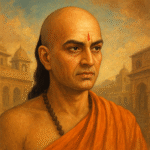

“Knowledge is the only wealth that can never be stolen, and it increases when shared.”
📌 The truest investment is the one made in intelligence.
🌿✨ चाणक्य नीति ✨🌿 “ ज्ञान ही वह धन है, जो चोरी नहीं होता, बांटने से बढ़ता है।” 📚💡 📌 सच्चा निवेश वही है जो बुद्धि में किया जाए।
Chanakya Message
Chanakya is teaching one of the most powerful truths about life the importance of knowledge.
He says that money, property, or material possessions can be lost, stolen, or destroyed. But knowledge once gained stays with you forever. No one can steal it, no disaster can destroy it, and no amount of time can erase it.
Even more beautifully, knowledge has a unique quality: it grows when you share it.
When you teach others, exchange ideas, or use your knowledge to help people, it doesn’t reduce it multiplies.
This is very different from physical wealth. If you give someone money, your balance decreases. But if you give someone knowledge, both of you become richer.
Chanakya reminds us that the real form of wealth is not what’s stored in your bank but what’s stored in your mind your understanding, skills, experiences, and wisdom.
When you keep learning, you keep growing. And when you keep sharing, you keep expanding your influence.
So, the best investment you can ever make is in your own learning your brain, your intellect, and your growth.
In Business Context
In the modern business world, Chanakya’s wisdom is more relevant than ever. Every successful entrepreneur, innovator, or leader knows that knowledge is the foundation of sustainable success.
Markets change, technology evolves, and competition grows but the one thing that keeps a business alive is its knowledge base: the skills, insights, and intellectual strength of its people.
Let’s explore this principle in depth from a business perspective.
A. Knowledge as the Most Valuable Asset
For a company, knowledge is more valuable than money or machines.
Physical assets can depreciate, but intellectual assets ideas, processes, systems, and expertise only appreciate with use and sharing.
Think about companies like Google, Apple, or Microsoft. Their true wealth isn’t just their offices or servers. It’s the knowledge of their teams, their research, their innovations, and their collective intelligence.
This is what Chanakya meant knowledge cannot be stolen.
Even if you lose everything, your skill and intelligence can rebuild it all again.
In business terms, this is intellectual capital the wealth of knowledge that drives innovation, productivity, and long-term growth.
B. The Power of Continuous Learning
Chanakya’s teaching reminds entrepreneurs and business leaders that learning never stops.
Markets evolve, customer behaviour changes, technologies advance and only those who keep learning stay relevant.
The moment a leader or company believes they know everything, decline begins.
That’s why successful companies invest heavily in research, employee training, and innovation labs. They understand that learning is not a cost it’s an investment in survival and progress.
Example:
Netflix started as a DVD rental company. But by continuously learning about digital trends and customer behavior, they transformed into the world’s leading streaming platform.
So, in business, knowledge is the key to adaptability.
C. Sharing Knowledge Creates Growth
Chanakya says knowledge increases when shared.
In a business context, this means creating a culture where ideas, learning, and experiences are openly shared within the organization.
When employees exchange insights, mentor each other, or collaborate across departments, the organization as a whole becomes smarter.
A company that hides knowledge within silos weakens itself, while a company that promotes sharing becomes innovative and efficient.
For example, Toyota’s legendary Kaizen system works because workers at all levels share feedback and suggest improvements daily. That shared knowledge becomes Toyota’s secret strength.
The same applies to leaders. A leader who mentors their team doesn’t lose power they multiply it. Their influence grows because they empower others through knowledge.
D. Knowledge as Protection and Power
In ancient times, kings used armies to protect their kingdoms.
In today’s business world, knowledge is that armor.
When your team knows more about the market, technology, competitors, and customer needs your business becomes resilient. Competitors may copy your product, but they can’t copy your wisdom or your thinking process.
For example, a business with deep industry expertise can survive economic downturns because it knows how to pivot, optimize, and innovate.
That’s why Chanakya said knowledge is wealth that can never be stolen.
It’s your ultimate defense against uncertainty.
E. The True Investment – Building Intellectual Capital
Chanakya’s line “The truest investment is the one made in intelligence” perfectly fits modern business philosophy.
Every rupee or dollar you invest in training, education, research, or technology that enhances knowledge gives the highest long-term return.
Investing in people’s minds creates innovation, efficiency, and leadership all of which are sustainable assets.
A short-term view focuses on revenue; a long-term vision focuses on wisdom.
That’s why great leaders like Warren Buffett, Elon Musk, and Satya Nadella constantly read, learn, and encourage their teams to do the same.
They understand that a well-trained mind is a limitless resource.
F. Knowledge Sharing with Customers and Community
Chanakya’s idea of knowledge grows when shared also applies to how businesses connect with their audience.
Modern companies grow trust and brand authority by educating their customers through blogs, webinars, tutorials, and open content.
For instance, SaaS companies that share helpful content about CRM systems, automation, and digital tools don’t just promote their products they build credibility.
The more value they give through knowledge, the more loyal customers they gain.
It’s a perfect example of Chanakya’s principle in action sharing knowledge expands wealth.
G. Leadership and Knowledge
A true leader isn’t just one who manages but one who knows and keeps learning.
Chanakya himself was the chief strategist and teacher behind one of history’s greatest empires. His strength wasn’t an army or wealth; it was his intelligence.
In business, leaders who base decisions on knowledge data, insights, and experience make stronger, wiser, and faster moves.
Leaders who act out of ignorance or ego often lead their teams to failure.
Knowledge-driven leadership creates trust, because people naturally follow those who understand, guide, and teach.
So, in today’s corporate world, leadership is no longer about authority it’s about wisdom.
H. The Infinite Nature of Knowledge
Chanakya’s statement that “knowledge increases when shared” also hints at abundance thinking.
Unlike physical resources, knowledge has no limit. The more you learn, the more you realize how much more there is to learn.
In a company, this mindset encourages curiosity and exploration leading to innovation.
In an entrepreneur, it creates humility the understanding that growth never ends.
When people work with a learning mindset, they stop fearing competition and start focusing on creation.
They know that success is not about having the most, but knowing the most.
I. Modern Application Knowledge Economy
We now live in what economists call the Knowledge Economy where information, data, and expertise are more valuable than physical goods.
The most successful startups today like Google, Amazon, or OpenAI thrive not because they have factories, but because they have intelligence and algorithms.
Chanakya predicted this thousands of years ago real wealth is intellectual, not material.
For businesses like yours (CRM, AI, or ERP systems), your true power lies in your product knowledge, market understanding, and problem-solving ability.
That’s what clients pay for not just the software, but the wisdom behind it.
Conclusion
Chanakya’s timeless wisdom “Knowledge is the only wealth that can never be stolen, and it increases when shared.” is a golden principle for modern entrepreneurs, professionals, and businesses.
Money fades, systems change, and markets evolve, but knowledge stays.
It protects, empowers, and multiplies.
In business, every investment in knowledge whether in yourself, your team, or your clients brings exponential returns.
When you share what you know, you don’t lose you grow.
So as Chanakya said true wealth is not in what you own, but in what you know.
And the truest investment of all… is the one made in your intelligence.